
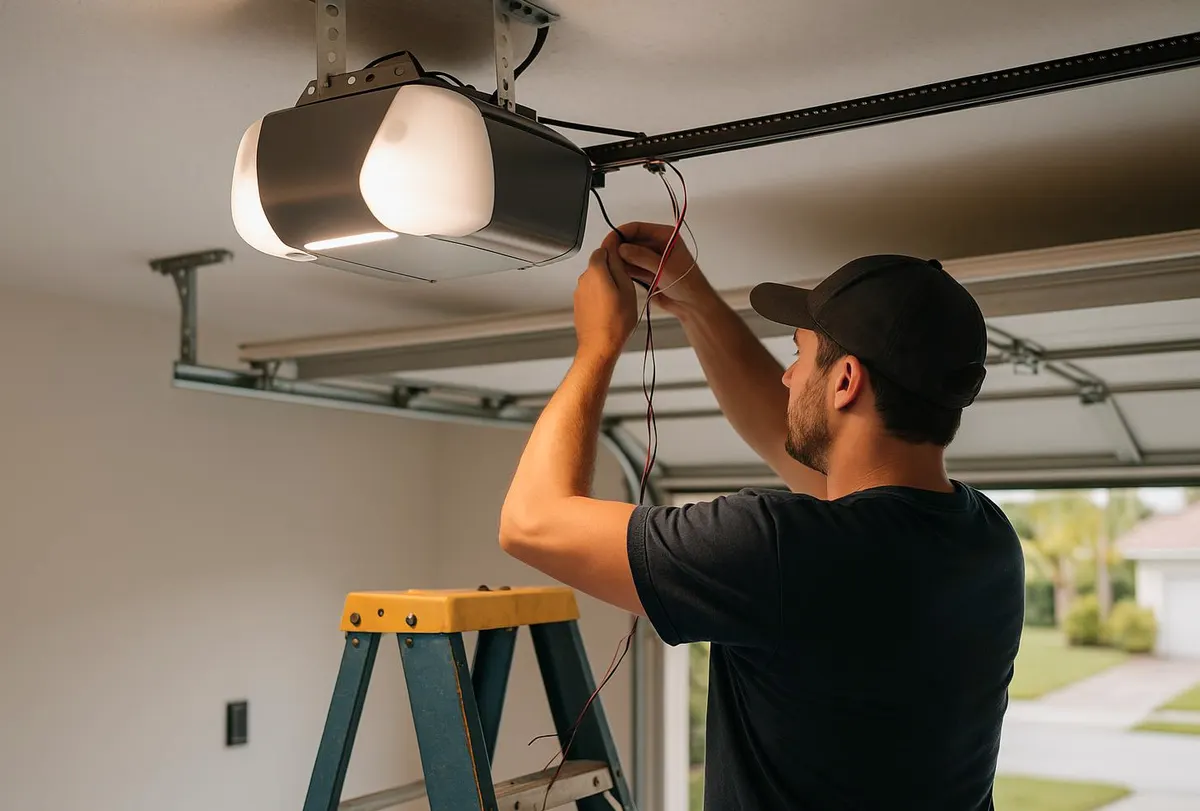
The first thing most people do is swap the remote batteries and mash the button a few more times. It makes sense — batteries are cheap, the fix takes thirty seconds, and most of us have had a remote die before. But if the opener still ignores you after fresh batteries, the problem usually isn't the remote at all, and chasing it there wastes time while the real issue sits untouched.
What This Actually Looks Like
"Ignoring" the remote or wall button can show up a few different ways, and the pattern matters for diagnosis:
- Total silence — no light, no click, no hum from the opener unit at all.
- Partial response — the light turns on or the motor hums, but the door doesn't move.
- One input works, the other doesn't — the wall button opens the door fine, but the remote does nothing (or the reverse).
- Inconsistent response — the door opens only from a few feet away, or only sometimes.
Each of these points toward a different stage in the system, which is why a technician doesn't start with the remote — they start with power.
The Order a Technician Actually Checks
1. Power to the Opener Unit
Before touching the remote, check whether the opener itself has power. A tripped breaker, a popped GFCI outlet, or a loose plug will make the whole unit dead to both the remote and the wall button at the same time. This is especially common after a storm — a brief surge or outage can trip a breaker without anyone noticing, and it's an easy thing to overlook because the symptom looks more dramatic than the cause.
2. The Wall Button and Its Wiring
If the wall button doesn't work but the remote does (or both fail), the low-voltage wire running to the button is a common culprit. In garages here, that wire often runs along a wall or baseboard where it's exposed to humidity, and over time the insulation can crack or the contacts can corrode. It's also not unusual for the wire to get nicked during yard work or chewed by something looking for a way in from outside. A technician checks the wire for continuity and inspects the button terminals for a loose or corroded connection before assuming the button itself is bad.
3. The Remote — Batteries, Then Condition
Only after power and wiring check out does attention turn to the remote. Dead batteries are the obvious culprit, but it's also worth checking the battery contacts themselves — humidity can cause a light film of corrosion that keeps a fresh battery from making contact. If the remote has been dropped, left in a hot car, or gotten wet, the internal board can fail even with good batteries installed.
4. The Antenna on the Opener
The antenna hanging from the opener unit picks up the remote's signal, and it's often overlooked. If it's bent, pushed up against a metal rail, or buried under dust and cobwebs — which build up fast in garages near pine trees — range drops significantly. This explains the "works up close, not from the driveway" symptom almost every time.
5. Lost Programming or Signal Interference
Openers occasionally lose their programmed remote codes, particularly after a power interruption. New electronics, a neighbor's device, or even some LED bulbs can also create interference on the same frequency. Reprogramming the remote is quick, but if it won't hold the code, that points to a deeper issue with the receiver.
6. The Circuit Board
If everything above checks out and the opener still won't respond, the logic board inside the unit is the likely cause. These boards are vulnerable to moisture and to power surges — both of which are relevant here given how often storms roll through and how much humidity builds up in an attached garage over a Smoky Mountain summer. A damaged board usually means replacing the control board or, depending on the opener's age, replacing the unit.
When to Call Sevierville Garage Door
If you've checked the breaker, swapped batteries, and the door still won't respond — or if the opener hums but the door won't budge — it's time to call in a technician rather than keep guessing. Our Garage Door Opener Repair & Installation service covers everything from wiring and antenna issues to circuit board diagnosis and replacement, and if the unit is old enough that repair doesn't make sense, we can walk you through installation options. We also handle routine Garage Door Maintenance, which catches corroded wiring and worn components before they turn into a dead opener on a Monday morning.
If your garage door in Sevierville, Pigeon Forge, or anywhere else in Sevier County has stopped listening to you, give Sevierville Garage Door a call — we'll find the actual cause and get it working again, not just the easy fix.